
Ford F-150 vs. Toyota Tundra: Real-World Differences That Matter
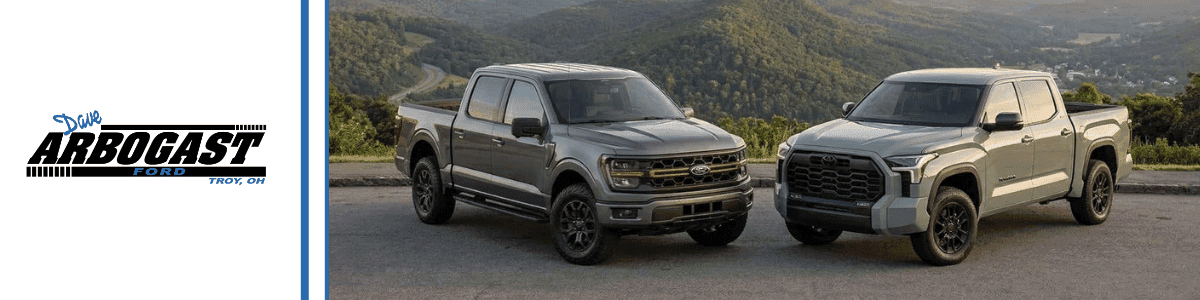
Two Full-Size Trucks, Two Different Approaches
Ask ten truck owners whether they would rather drive a Ford F-150 or Toyota Tundra, and you might get ten different answers. Both pickups have earned their place on American roads, but when you compare their engines, towing capacity, reliability, and everyday features, some important differences start to appear.
At Dave Arbogast Ford in Troy, Ohio, we know a truck has to do more than look good in the driveway. It needs to handle construction projects around Dayton, tow a camper to Indian Lake, carry equipment through the workweek, and still be comfortable enough for the family on Saturday. That’s why the Ford F-150 vs. Toyota Tundra debate is worth a closer look.
Here’s what separates these two popular full-size pickups:
- Engine choices: The F-150 offers turbocharged V6, traditional V8, and hybrid powertrains, while the Tundra focuses on twin-turbo V6 engines.
- Towing and payload: The properly equipped F-150 offers higher maximum ratings in both categories.
- Reliability: Both trucks have ownership considerations, including recalls, maintenance costs, and powertrain differences.
- Technology: Ford offers features such as Pro Power Onboard, Pro Trailer Backup Assist, and available BlueCruise hands-free highway driving.
Ford F-150 vs. Toyota Tundra: Engine Options and Performance
The biggest difference between these trucks starts under the hood. Ford gives buyers several ways to build an F-150, depending on whether they prioritize fuel efficiency, towing, horsepower, or the familiar sound of a V8 engine.
Ford F-150 Engine Choices
The 2026 Ford F-150 offers a broad selection of powertrains. The 2.7L EcoBoost V6 provides 325 horsepower and 400 lb-ft of torque, making it a capable everyday engine for commuting, light towing, and weekend projects.
Drivers who prefer traditional V8 power can choose the available 5.0L Ti-VCT V8, producing 400 horsepower and 410 lb-ft of torque. For heavier towing, the 3.5L EcoBoost V6 delivers 400 horsepower and 500 lb-ft of torque.
There’s also the 3.5L PowerBoost Full Hybrid V6, combining gasoline and electric power for 430 horsepower and 578 lb-ft of torque. The hybrid is especially appealing for drivers who want strong performance and the convenience of available onboard electrical power.
Toyota Tundra Engine Choices
Toyota takes a different approach. The 2026 Tundra uses a twin-turbocharged 3.4L V6, with output reaching 389 horsepower and 479 lb-ft of torque on many non-hybrid configurations. A lower-output version is offered on certain entry-level models.
The available i-FORCE MAX hybrid increases output to 437 horsepower and 583 lb-ft of torque. That’s slightly more horsepower and torque than the F-150 PowerBoost hybrid, although maximum towing capacity tells a different story.
Unlike the F-150, the current Tundra does not offer a V8. For buyers who specifically want eight-cylinder power, Ford remains an option.
Tundra vs. F150: Which Truck Can Tow More?
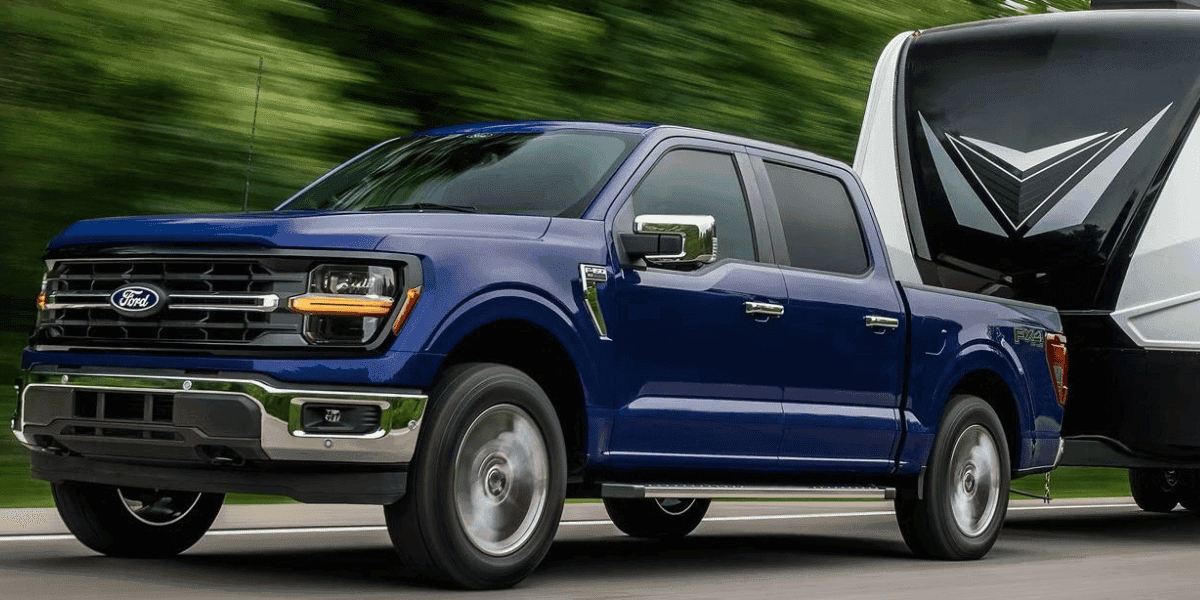
If you regularly tow a boat, equipment trailer, camper, or utility trailer, this is where the comparison gets interesting. Both trucks are capable, but the Ford F-150 offers a higher maximum available towing rating.
A properly equipped 2026 Ford F-150 with the 3.5L EcoBoost V6 can tow up to 13,500 pounds. The 2026 Toyota Tundra tops out at 12,000 pounds when properly configured.
That gives the F-150 a 1,500-pound advantage in maximum available towing capacity. It doesn’t mean every F-150 can out-tow every Tundra, though. Cab style, drivetrain, axle ratio, equipment, and trailer packages all affect what an individual truck can safely pull.
Payload matters just as much. The F-150 offers a maximum available payload rating of 2,440 pounds, compared with the Tundra’s maximum of 1,850 pounds. That difference can matter when you’re loading tools, building supplies, passengers, and cargo into the bed and cab.
Why Towing Technology Matters
Raw towing numbers only tell part of the story. The F-150 offers available Pro Trailer Backup Assist, which helps drivers maneuver a trailer in reverse, and Pro Trailer Hitch Assist, designed to simplify lining up the truck with a trailer hitch.
The Tundra also offers useful trailering technology, including available Trailer Backup Guide and Straight Path Assist. Both manufacturers understand that towing should be manageable, not intimidating.
For Ohio drivers regularly hauling equipment or taking a camper out for the weekend, the F-150’s higher available towing and payload ratings make it especially worth considering.
F150 vs. Tundra Reliability: What Should Buyers Know?
Reliability is one of the most important questions in any F150 vs. Tundra comparison. A truck can have impressive horsepower and towing numbers, but none of that matters much if it’s spending more time in the service department than on the road.
Toyota has a longstanding reputation for building durable vehicles, and previous generations of the Tundra helped establish that reputation. However, buyers should distinguish the older V8-powered Tundra from the newer twin-turbo V6 generation introduced for the 2022 model year.
Toyota Tundra Engine Recall Concerns
Certain 2022 through 2024 Toyota Tundra models equipped with the V35A engine have been involved in safety recalls related to manufacturing debris potentially damaging internal engine bearings. Toyota has explained that this condition can cause engine knocking, rough operation, failure to start, or loss of drive power.
Additional recall activity announced in 2025 and 2026 expanded the scope of affected vehicles. These recalls concern specific vehicles and production periods, not every Toyota Tundra. Buyers considering a used Tundra should verify the vehicle identification number and confirm whether required repairs have been completed.
Recall information can be checked through the National Highway Traffic Safety Administration.
What About Ford F-150 Reliability?
The F-150 has its own long history of real-world ownership, and its reliability depends on the model year, engine, maintenance history, and driving conditions. Ford has issued recalls and service updates affecting various F-150 model years, so shoppers should check an individual truck’s VIN rather than assume any model is free of potential problems.
One advantage of the F-150 is its variety of engine choices. Drivers can select a naturally aspirated V8, a smaller turbocharged V6, a higher-output EcoBoost engine, or a full hybrid depending on their priorities.
Regular oil changes, proper cooling-system maintenance, timely repairs, and following the manufacturer’s towing recommendations all contribute to long-term dependability.
Which Is More Reliable: F150 or Tundra?
There’s no universal answer that applies to every model year and engine combination. Toyota’s historical reliability reputation is worth considering, but the newer Tundra’s engine recalls are also relevant. Ford’s F-150 offers more powertrain choices, although each engine has its own maintenance requirements and ownership history.
For anyone comparing F150 vs. Tundra reliability, the smartest approach is to look at the specific model year, powertrain, recall history, service records, and warranty coverage instead of relying on a brand’s reputation alone.
Fuel Economy: F-150 vs. Tundra MPG
Fuel economy is another factor that can change the cost of owning a full-size pickup, especially if you’re driving between Troy, Dayton, Vandalia, and Springfield throughout the week.
The F-150 offers multiple gasoline engines and a PowerBoost full hybrid. The Toyota Tundra also offers a hybrid, but its i-FORCE MAX system is designed primarily to increase power and torque rather than deliver a dramatic improvement in fuel economy.
For example, certain 2026 Tundra gasoline configurations carry an EPA-estimated 18 city and 23 highway MPG rating. Fuel economy varies with drivetrain, trim, and equipment.
The F-150’s efficiency varies considerably by engine. The PowerBoost hybrid can offer an advantage over many traditional gasoline configurations, while the V8 and high-performance Raptor models serve buyers with different priorities.
Before choosing either truck, compare the EPA estimates for the exact engine and drivetrain you’re considering. You can review official ratings at FuelEconomy.gov.
Interior Comfort, Technology, and Everyday Use
A full-size truck isn’t just a work vehicle anymore. For many families, it’s also the daily commuter, road-trip vehicle, and weekend adventure machine.
Ford F-150 Interior and Technology
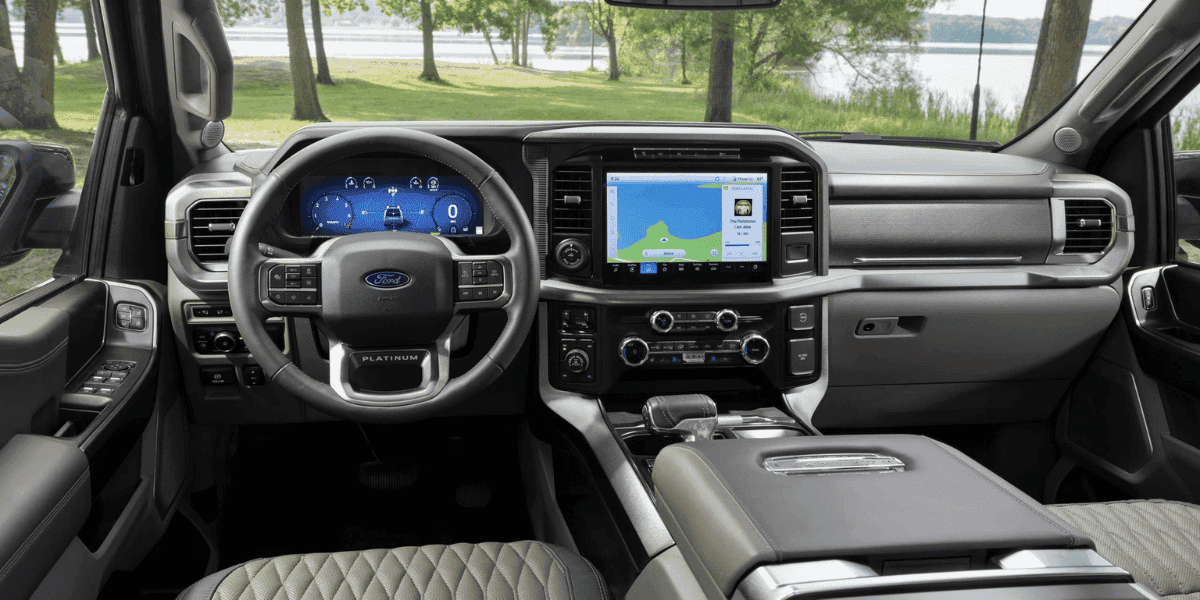
The F-150 offers available features designed around both work and everyday comfort. Its SYNC 4 infotainment system, available premium audio, and higher-trim interior materials help make long drives more enjoyable.
Available Ford BlueCruise allows hands-free highway driving on compatible designated roads while the driver remains attentive. For drivers who spend time traveling I-75 between Dayton and Troy, it’s a feature worth exploring.
Another distinctive option is Pro Power Onboard. Depending on the powertrain and equipment, the F-150 can supply electricity through integrated outlets, with up to 7.2 kW available on properly equipped PowerBoost hybrid models. That can be useful for powering tools, camping equipment, or other electrical devices.
Toyota Tundra Interior and Technology
The Tundra offers a comfortable, modern cabin with an available 14-inch multimedia touchscreen, premium interior appointments, and advanced driver-assistance features.
Toyota Safety Sense includes technologies designed to assist with braking, lane guidance, and highway driving. Higher Tundra trims also provide upscale seating and interior finishes.
Both trucks can serve as comfortable family vehicles. The F-150 stands out for its combination of available hands-free highway driving, work-focused electrical power, and trailer-assistance features.
Ford F-150 vs. Toyota Tundra: Side-by-Side Comparison
| Category | 2026 Ford F-150 | 2026 Toyota Tundra |
|---|---|---|
| Engine Options | 2.7L EcoBoost V6, 5.0L V8, 3.5L EcoBoost V6, 3.5L PowerBoost Hybrid, and Raptor performance engines | 3.4L Twin-Turbo V6 and i-FORCE MAX Hybrid V6 |
| Maximum Available Towing | 13,500 lbs | 12,000 lbs |
| Maximum Available Payload | 2,440 lbs | 1,850 lbs |
| Hybrid Horsepower | 430 hp | 437 hp |
| Hybrid Torque | 578 lb-ft | 583 lb-ft |
| V8 Available? | Yes, 5.0L V8 | No |
| Hybrid Available? | Yes, PowerBoost Full Hybrid | Yes, i-FORCE MAX |
| Hands-Free Highway Driving | Available BlueCruise on equipped trims | Toyota Safety Sense driver-assistance features; no equivalent BlueCruise hands-free system |
| Onboard Power | Available Pro Power Onboard, up to 7.2 kW | Available bed-mounted power outlet, with output dependent on configuration |
| Off-Road Models | Tremor and Raptor | TRD Off-Road and TRD Pro |
Specifications represent manufacturer-published maximum available figures for the 2026 model year. Actual capability varies by vehicle configuration, equipment, payload, and other factors. Verify individual vehicle specifications before towing.
Off-Road Capability: F-150 Tremor and Raptor vs. Tundra TRD Pro
For drivers who enjoy getting off the pavement, both Ford and Toyota offer trucks built for rougher terrain.
The Ford F-150 Tremor adds off-road-focused equipment, including specialized suspension tuning and available trail technology. The F-150 Raptor takes performance further with high-output powertrains, specialized suspension, and hardware designed for demanding off-road driving.
Toyota counters with the Tundra TRD Off-Road package and TRD Pro, which adds equipment such as FOX suspension components, off-road tires, and terrain-management technology.
If your weekends involve muddy trails, hunting property, or rough access roads around Ohio, either brand offers capable options. For buyers interested in high-performance desert-style driving, the F-150 Raptor offers a particularly specialized approach.
Which Truck Makes More Sense for Ohio Drivers?
The right answer depends on what you actually expect your truck to do.
Choose the Ford F-150 If You Want:
- A wider selection of gasoline and hybrid engines.
- The option of a traditional 5.0L V8.
- Higher maximum available towing and payload capacity.
- Available Pro Power Onboard for tools and equipment.
- Available BlueCruise hands-free highway driving.
- Multiple trim levels designed for work, luxury, or off-road adventures.
Consider the Toyota Tundra If You Want:
- A twin-turbo V6 powertrain across the lineup.
- A hybrid with 437 horsepower and 583 lb-ft of torque.
- Available Toyota TRD off-road equipment.
- A comfortable full-size pickup with available premium interior features.
For many drivers around Troy, Dayton, Tipp City, and Vandalia, the F-150’s engine selection, towing capabilities, and work-friendly features make it a compelling choice. But the best way to decide is to compare the configurations that match your needs.
Frequently Asked Questions About the Ford F-150 vs. Toyota Tundra
Is the Ford F-150 better than the Toyota Tundra?
The F-150 offers higher maximum available towing and payload ratings, more engine choices, and an available V8. The Tundra offers strong twin-turbo V6 performance and a powerful hybrid. Which truck is better depends on how you plan to use it.
Which is more reliable, the F150 or Tundra?
Reliability depends on the model year, engine, maintenance history, and individual vehicle. Certain newer Tundras have been affected by engine-related recalls, while F-150 models have their own recall and service histories. Compare specific vehicles and check their VINs before purchasing.
Does the F-150 tow more than the Tundra?
Yes, when comparing maximum available ratings. The properly equipped 2026 Ford F-150 can tow up to 13,500 pounds, compared with up to 12,000 pounds for the 2026 Toyota Tundra.
Does the Toyota Tundra have a V8 engine?
No. The 2026 Toyota Tundra uses twin-turbo V6 powertrains, including an available hybrid. The Ford F-150 continues to offer an available 5.0L V8.
Which truck has better gas mileage, the F150 or Tundra?
Fuel economy depends on the engine, drivetrain, and configuration. The F-150 PowerBoost hybrid is worth considering for drivers who prioritize efficiency, while the Tundra’s gasoline and hybrid engines have different fuel-economy ratings. Compare official EPA estimates for the specific trucks.
Is the F-150 PowerBoost better than the Tundra i-FORCE MAX?
The Tundra i-FORCE MAX produces slightly more horsepower and torque than the F-150 PowerBoost. However, the F-150 hybrid offers available Pro Power Onboard with up to 7.2 kW of electrical output and can tow up to 11,600 pounds when properly equipped. The better choice depends on your priorities.
Where can I test drive a Ford F-150 near Dayton, Ohio?
You can explore new Ford F-150 trucks at Dave Arbogast Ford in Troy, Ohio, just off I-75. Our team can help you compare engines, towing packages, trim levels, and available features.
Find Your Next Ford F-150 at Dave Arbogast Ford
The Ford F-150 vs. Toyota Tundra comparison comes down to more than numbers on a specification sheet. Both are capable full-size pickups, but the F-150 offers a combination of engine flexibility, available towing capacity, technology, and practical work features that’s difficult to overlook.
At Dave Arbogast Ford in Troy, Ohio, we’ve been helping drivers find the right Ford since 1977. We’re family-owned, conveniently located just off I-75, and proud to serve truck shoppers throughout Dayton, Vandalia, Tipp City, Springfield, and the surrounding communities.
Whether you’re looking for a dependable work truck, a comfortable daily driver, or something capable of towing your weekend toys, our team can help you explore the available F-150 lineup. We’ll walk you through engine options, packages, trade-in values, and financing without unnecessary pressure.
Ready to see what the Ford F-150 can do? Explore our available trucks or visit us in Troy for a test drive.
Dave Arbogast Ford – Driven to Your Satisfaction.
