
Ford Explorer vs. Ford Expedition: Size, Space & Real-World Differences
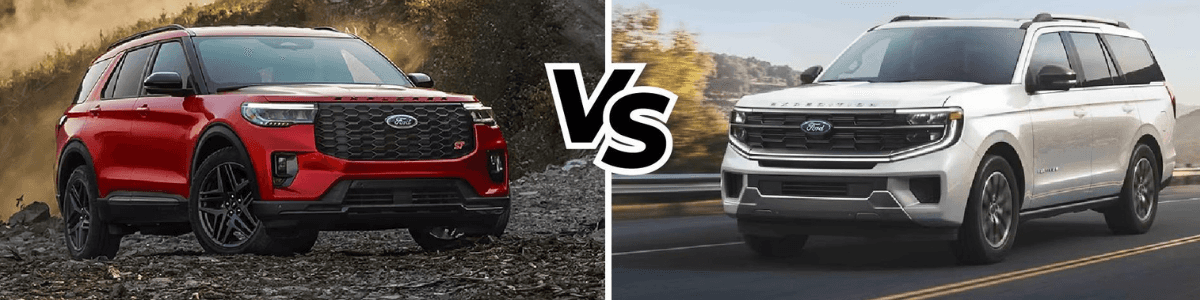
Two Three-Row Ford SUVs, Two Different Ways to Travel
Pull into the Dave Arbogast Ford lot in Troy, Ohio, and you’ll find two SUVs designed to handle family life in very different ways. The Ford Explorer offers three rows of seating in a manageable midsize package. The Ford Expedition takes things further with a larger cabin, more available cargo room, and towing capability that approaches full-size pickup territory. Both are built for busy families, but choosing between them comes down to how much space you actually need.
The Ford Explorer vs Expedition comparison is about more than which SUV is bigger. Seating arrangements, third-row comfort, fuel economy, towing capacity, and everyday maneuverability all matter when you’re deciding what belongs in your driveway.
For families around Troy, Dayton, Vandalia, Tipp City, and Springfield, the right SUV might need to handle school drop-offs during the week, trips down I-75, and family vacations with a full load of luggage.
- Ford Explorer: A midsize three-row SUV with seating for six or seven, available four-wheel drive, and up to 5,000 pounds of towing capacity.
- Ford Expedition: A full-size SUV with seating for seven or eight, a larger interior, and up to 9,600 pounds of available towing capacity.
- Ford Expedition MAX: An extended-length Expedition with additional cargo room behind the third row.
- Biggest difference: The Explorer is easier to maneuver in tighter spaces, while the Expedition offers more room for passengers, luggage, and larger trailers.
Explorer vs. Expedition Size: How Much Bigger Is the Expedition?
If you’re comparing Ford Explorer vs Ford Expedition dimensions, the difference becomes obvious when you park them side by side.
The 2026 Ford Explorer measures 198.7 inches long, with a 119.1-inch wheelbase. That’s plenty of vehicle for three rows of seating, but it’s still manageable enough for everyday parking lots and residential garages.
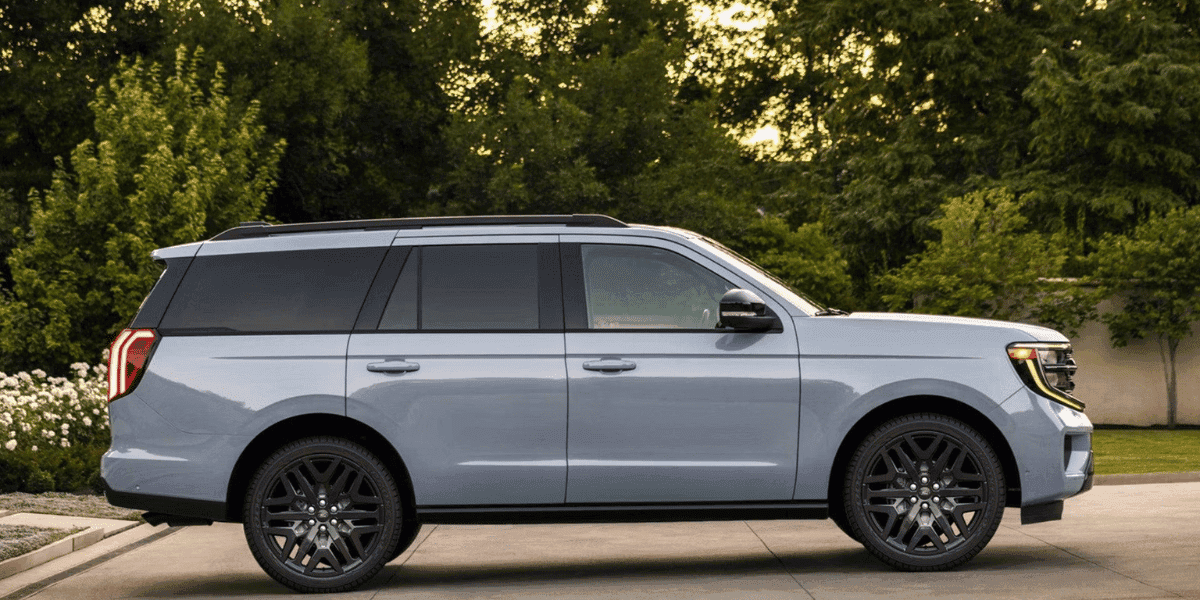
The standard 2026 Ford Expedition stretches to 209.9 inches long, with a 122.5-inch wheelbase. That makes it 11.2 inches longer than the Explorer. The Expedition is also taller and wider, giving passengers a more spacious cabin.
Need even more room? The Expedition MAX measures 221.7 inches long and has a 131.5-inch wheelbase. Compared with the Explorer, that’s an additional 23 inches of overall length.
Ford Explorer vs. Expedition Exterior Dimensions
| Dimension | Ford Explorer | Ford Expedition | Expedition MAX |
|---|---|---|---|
| Overall Length | 198.7 in. | 209.9 in. | 221.7 in. |
| Wheelbase | 119.1 in. | 122.5 in. | 131.5 in. |
| Width Without Mirrors | 78.9 in. | 80.0 in. | 80.0 in. |
| Width With Mirrors | 89.3 in. | 94.6 in. | 94.6 in. |
| Seating Capacity | 6-7 | 7-8 | 7-8 |
These dimensions matter when you’re choosing a vehicle for everyday life. The Explorer’s smaller footprint can make parking in downtown Troy or navigating crowded shopping centers easier. The Expedition offers a larger cabin, but you’ll want to consider your garage dimensions and parking space.
If you’re considering the Expedition MAX, measure your garage before buying. At more than 18 feet long, it requires considerably more room than the Explorer.
Interior Space: Which SUV Has More Room for Your Family?
Both the Explorer and Expedition offer three rows of seating, but the amount of space available in those rows is different.
Ford Explorer Seating and Third-Row Space
The 2026 Explorer seats six or seven passengers depending on the trim and second-row configuration. Models with second-row captain’s chairs seat six, while configurations with a second-row bench can accommodate seven.
The Explorer offers 42.9 inches of front legroom on most trims, approximately 37 inches in the second row, and 31.8 inches in the third row. That makes it comfortable for many families, although taller adults may prefer sitting in the first or second row on longer trips.
For families with younger children, the Explorer’s third row can be especially useful for carpools, weekend activities, and occasional extra passengers.
Ford Expedition Seating and Third-Row Space
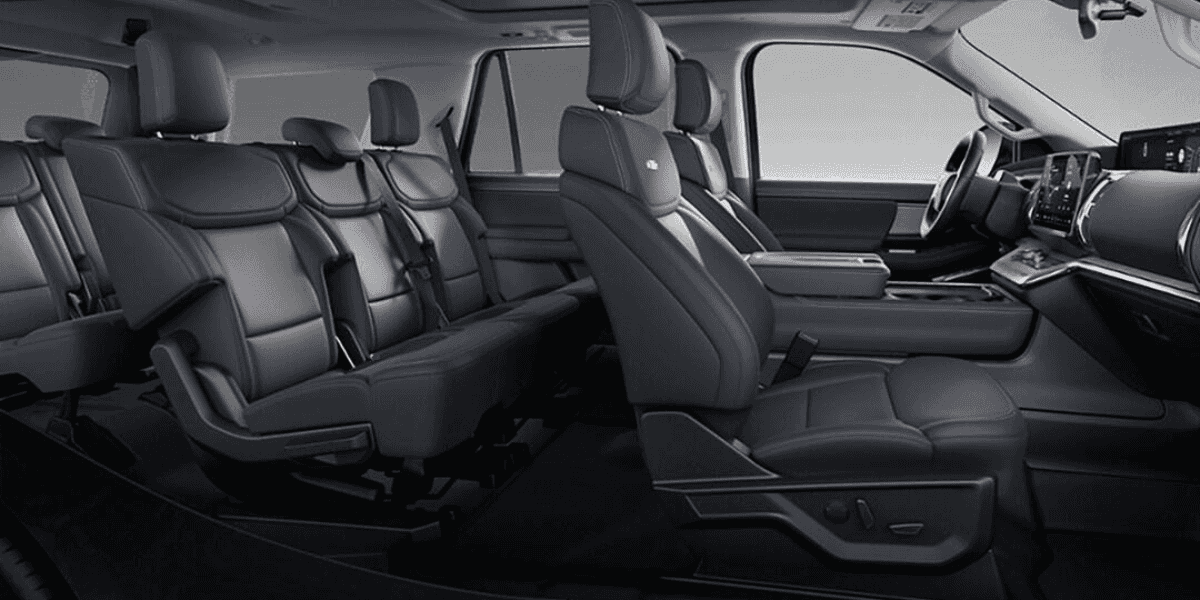
The Expedition offers seating for seven or eight, depending on configuration. Its larger body allows for a more spacious third row, making it appealing to families who regularly travel with a full cabin.
The Expedition’s second-row seating arrangements include available captain’s chairs or a bench seat, depending on trim. Families with multiple car seats or older children may appreciate the additional cabin width and passenger room.
The Expedition MAX provides similar passenger accommodations but adds more space behind the third row, which becomes especially valuable when all seats are occupied.
Explorer vs. Expedition Cargo Space: The Numbers Tell the Story
Cargo capacity is one of the most important differences between these SUVs. If you’re packing for a weekend getaway, hauling sports equipment, or traveling with luggage for seven people, the amount of space behind the third row can make a major difference.
The 2026 Explorer provides 16.3 cubic feet of cargo space behind its third row and up to 85.8 cubic feet with the rear seats folded, depending on trim.
The standard Expedition offers 22.9 cubic feet behind the third row and up to 108.5 cubic feet with the second and third rows folded.
The Expedition MAX takes cargo capacity even further, providing 37.4 cubic feet behind the third row and up to 123.1 cubic feet of maximum cargo space.
Ford Explorer vs. Expedition Cargo Capacity
| Cargo Space | Explorer | Expedition | Expedition MAX |
|---|---|---|---|
| Behind Third Row | 16.3 cu. ft. | 22.9 cu. ft. | 37.4 cu. ft. |
| Behind Second Row | Varies by seating configuration | 69.9 cu. ft. | 84.5 cu. ft. |
| Maximum Cargo Space | 85.8 cu. ft. | 108.5 cu. ft. | 123.1 cu. ft. |
Here’s the practical difference: the Expedition MAX offers more than twice the cargo space behind the third row compared with the Explorer. That means more room for suitcases, strollers, coolers, and sports equipment without folding down passenger seats.
If you only use the third row occasionally, the Explorer may provide all the cargo flexibility you need. If you regularly travel with seven or eight passengers and their luggage, the Expedition or Expedition MAX is worth a closer look.
Engine Performance: Explorer vs. Expedition Power
Size isn’t the only difference between these SUVs. Ford equips the Explorer and Expedition with different engines designed around their respective capabilities.
2026 Ford Explorer Engine Options
The Explorer offers a standard 2.3L EcoBoost four-cylinder producing 300 horsepower and 310 lb-ft of torque. This engine provides a balance of everyday performance and fuel efficiency.
For drivers who want more power, the available 3.0L EcoBoost V6 produces 400 horsepower and 415 lb-ft of torque in the Explorer ST. Certain 2026 Tremor configurations offer a different V6 output, so it’s worth confirming the specifications of the exact vehicle you’re considering.
The Explorer’s smaller size and engine options make it a practical choice for commuting, highway travel, and family transportation.
2026 Ford Expedition Engine Options
The Expedition uses a 3.5L EcoBoost V6 producing 400 horsepower and 480 lb-ft of torque. This engine provides the low-end pulling power needed for a larger SUV carrying passengers and cargo.
An available high-output 3.5L EcoBoost V6 increases performance to 440 horsepower and 510 lb-ft of torque. The high-output engine is standard on the Expedition Tremor and available on certain other configurations.
The Expedition’s additional torque is especially useful when towing larger trailers or traveling with a fully loaded vehicle.
Towing Capacity: Can the Explorer Keep Up With the Expedition?
If you plan to tow a camper, boat, or recreational trailer, this is where the difference between the Explorer and Expedition becomes especially important.
The 2026 Ford Explorer offers a maximum towing capacity of 5,000 pounds when properly equipped. Ford includes a Class III Trailer Tow Package across the Explorer lineup.
The standard Expedition can tow up to 9,600 pounds with the proper configuration and available Heavy-Duty Trailer Tow Package. The Expedition MAX can tow up to 9,000 pounds when properly equipped.
That gives the standard Expedition a maximum available towing advantage of 4,600 pounds over the Explorer.
For families pulling a lightweight utility trailer or smaller recreational trailer, the Explorer may be sufficient. For larger campers, boats, or heavier equipment, the Expedition offers substantially more available towing capability.
Always check the exact vehicle’s tow rating, tongue-weight limits, payload, passengers, and equipment before towing.
Fuel Economy: Which Ford SUV Uses Less Gas?
The Explorer’s smaller size and available 2.3L EcoBoost engine generally give it an advantage in fuel efficiency compared with the larger Expedition.
The 2026 Expedition with the standard 3.5L EcoBoost engine offers an EPA-estimated 16 city and 24 highway MPG in certain rear-wheel-drive configurations. Four-wheel-drive models and different trims may have lower ratings.
Explorer fuel economy depends on whether you choose the 2.3L four-cylinder or 3.0L V6, along with the drivetrain and trim. The four-cylinder is worth considering if you spend most of your time commuting or driving around town.
If you’re regularly traveling between Troy and Dayton or spending hours on I-75, fuel costs may make the Explorer more appealing. However, the Expedition’s larger cabin and higher towing capability may justify the additional fuel consumption for families who need that extra capacity.
For exact EPA ratings by configuration, visit FuelEconomy.gov.
Interior Technology and Family-Friendly Features
Both SUVs offer modern Ford technology, but their interior layouts reflect different priorities.
Ford Explorer Technology
The Explorer offers a 13.2-inch center touchscreen with the Ford Digital Experience, wireless Apple CarPlay and Android Auto compatibility, and available BlueCruise hands-free highway driving.
Higher trims add features such as premium audio, heated and ventilated front seats, and available massaging seating surfaces.
The Explorer ST brings a performance-focused personality, while the Tremor adds off-road-oriented equipment for drivers who want something more adventurous.
Ford Expedition Technology
The Expedition offers a spacious, technology-focused interior with a panoramic display layout, available BlueCruise hands-free highway driving, and a flexible seating arrangement designed for larger families.
Its available Ford Split Gate provides a convenient way to access cargo and creates a useful surface for tailgating, outdoor activities, or loading equipment.
Higher Expedition trims offer premium seating materials, advanced driver-assistance technology, and comfort features designed for longer trips.
Both SUVs can be excellent family vehicles. The Explorer emphasizes a manageable size and everyday convenience, while the Expedition adds space and versatility for larger groups.
Ford Explorer vs. Ford Expedition: Side-by-Side Comparison
| Category | 2026 Ford Explorer | 2026 Ford Expedition |
|---|---|---|
| Vehicle Class | Midsize SUV | Full-size SUV |
| Overall Length | 198.7 in. | 209.9 in. / 221.7 in. MAX |
| Passenger Capacity | 6-7 | 7-8 |
| Standard Engine | 2.3L EcoBoost I-4 | 3.5L EcoBoost V6 |
| Available Engine | 3.0L EcoBoost V6 | 3.5L EcoBoost High-Output V6 |
| Maximum Available Horsepower | 400 hp, ST | 440 hp |
| Maximum Available Towing | 5,000 lbs | 9,600 lbs standard wheelbase / 9,000 lbs MAX |
| Cargo Behind Third Row | 16.3 cu. ft. | 22.9 cu. ft. / 37.4 cu. ft. MAX |
| Maximum Cargo Space | 85.8 cu. ft. | 108.5 cu. ft. / 123.1 cu. ft. MAX |
| Available 4WD | Yes | Yes |
| Available BlueCruise | Yes | Yes |
| Off-Road Trim | Tremor | Tremor |
Specifications are based on Ford’s published 2026 model information. Dimensions, cargo volume, equipment, and performance may vary by trim and configuration. Maximum towing ratings require properly equipped vehicles.
Which SUV Is Better for Ohio Families?
The Explorer vs Expedition decision becomes easier when you think about how many people you regularly carry, how much cargo you need, and where you drive most often.
Choose the Ford Explorer If You Want:
- Three rows of seating in a more manageable midsize SUV.
- Room for six or seven passengers.
- A smaller footprint for parking and everyday driving.
- An available 2.3L EcoBoost engine with an emphasis on efficiency.
- Up to 5,000 pounds of towing capability.
- Available BlueCruise and modern Ford technology.
- Performance-oriented ST or off-road-focused Tremor options.
Choose the Ford Expedition If You Want:
- Seating for up to eight passengers.
- More room for adults in the third row.
- Substantially more cargo capacity behind the rear seats.
- Up to 9,600 pounds of available towing capability.
- A powerful standard 3.5L EcoBoost V6.
- An extended-length MAX option for additional luggage space.
- A larger, more spacious cabin for long family road trips.
For families who primarily commute, run errands, and occasionally use the third row, the Explorer may be the more practical choice. For larger families who regularly fill every seat or tow heavier trailers, the Expedition offers advantages that are difficult to ignore.
Frequently Asked Questions About the Ford Explorer vs. Expedition
What is the difference between the Ford Explorer and Ford Expedition?
The Ford Explorer is a midsize three-row SUV that seats six or seven passengers. The Ford Expedition is a larger full-size SUV that seats seven or eight and offers more cargo space and higher towing capacity.
How much bigger is the Expedition than the Explorer?
The 2026 Ford Explorer is 198.7 inches long, while the standard Expedition is 209.9 inches long. That makes the Expedition 11.2 inches longer. The Expedition MAX measures 221.7 inches, making it 23 inches longer than the Explorer.
Does the Ford Expedition have more cargo space than the Explorer?
Yes. The Explorer offers 16.3 cubic feet behind the third row, compared with 22.9 cubic feet in the standard Expedition and 37.4 cubic feet in the Expedition MAX. The Expedition also offers greater maximum cargo capacity.
Which has more third-row legroom, the Explorer or Expedition?
The Expedition provides more third-row legroom than the Explorer, making it more suitable for regularly carrying adult passengers in all three rows. The Explorer’s third row is useful for children and occasional additional passengers.
Can the Ford Explorer tow as much as the Expedition?
No. The 2026 Ford Explorer can tow up to 5,000 pounds when properly equipped. The standard Expedition can tow up to 9,600 pounds, while the Expedition MAX can tow up to 9,000 pounds with the proper equipment.
Is the Ford Explorer or Expedition better on gas?
The Explorer generally offers better fuel efficiency, particularly with its 2.3L EcoBoost engine. The larger Expedition uses a 3.5L EcoBoost V6 and typically consumes more fuel. Exact MPG ratings depend on engine, drivetrain, and trim.
Is the Ford Expedition MAX worth the extra size?
The Expedition MAX is worth considering if you regularly travel with seven or eight passengers and need additional luggage space. It provides 37.4 cubic feet of cargo room behind the third row, compared with 22.9 cubic feet in the standard Expedition.
Where can I test drive a Ford Explorer or Expedition near Dayton, Ohio?
Dave Arbogast Ford in Troy, Ohio, serves drivers throughout the Dayton area. You can explore available Ford Explorer and Expedition SUVs, compare their dimensions and features, and schedule a test drive with our team.
Compare the Ford Explorer and Expedition at Dave Arbogast Ford
The Ford Explorer vs Ford Expedition comparison comes down to how much space and capability you need. The Explorer offers three-row versatility in a manageable midsize SUV, while the Expedition provides additional passenger room, cargo capacity, and towing power.
At Dave Arbogast Ford in Troy, Ohio, we’ve been helping drivers find the right Ford since 1977. Our family-owned dealership is conveniently located just off I-75, making it an easy trip from Dayton, Vandalia, Tipp City, Springfield, and surrounding communities.
Whether you’re interested in an Explorer Active, ST-Line, Tremor, Platinum, or ST, or you’re considering a larger Expedition Active, Platinum, Tremor, King Ranch, or Expedition MAX, our team can help you compare the options.
We’ll walk you through seating configurations, cargo space, engine choices, towing packages, current incentives, financing options, and trade-in values so you can find an SUV that fits your family.
Ready to experience the difference? Explore our available Ford Explorer and Expedition SUVs or visit Dave Arbogast Ford in Troy for a test drive.
Dave Arbogast Ford – Driven to Your Satisfaction.
